The luxury real estate market is set to grow in 2025. It will focus on value and unique experiences. Having a good Property Investment Strategy is key.
With the Federal Reserve cutting interest rates, inflation and construction costs might peak. This could lead to more real estate deals. Investors can make smart choices with the right real estate investing tips.
The market is getting more complex. The senior citizen population is growing, leading to a housing shortage. “Movers and shakers” markets are also improving fast. A solid Property Investment Strategy and real estate investing tips are vital for success.

As the market changes, staying ahead is critical. A good Property Investment Strategy and real estate investing tips are essential. With more deals expected and a focus on unique experiences, the luxury real estate market is ready to grow.
Key Takeaways
- The luxury real estate market is expected to continue growing in 2025, with a focus on value-driven luxury and unique experiences.
- A solid Property Investment Strategy is essential for navigating the complex luxury real estate market.
- Real estate investing tips can help individuals make informed decisions and achieve their goals in the luxury real estate market.
- The growing senior citizen demographic is leading to a shortage of housing developments tailored to their needs.
- The emergence of “movers and shakers” markets is showing significant year-over-year improvement, attracting institutional investor interest.
- The Federal Reserve’s pivot to reducing interest rates is anticipated to increase real estate transaction activity.
- A well-planned Property Investment Strategy and knowledge of real estate investing tips can help individuals stay ahead of the curve in the luxury real estate market.
Overview of the Luxury Real Estate Market
The luxury real estate market is complex and always changing. It’s moving towards value-driven luxury, where buyers look for unique experiences and long-term gains. To succeed, investors and buyers need a strong rental property strategy and advice.
The Coldwell Banker Global Luxury program says the market will keep growing. It will focus on value-driven luxury and unique experiences. High-net-worth individuals want exclusive properties with advanced security, smart home tech, and wellness features.
Investing in luxury real estate means watching market trends, economic cycles, and global events. Luxury properties in vacation spots like the French Riviera and Aspen have strong rental demand. A good rental property strategy and advice are key to success.
Major financial hubs like New York, London, and Singapore attract high-net-worth individuals. They offer consistent rental yields and strong international interest. Cities like Dubai, Miami, and Puerto Rico have affordable luxury and high appreciation potentials. Understanding these trends and having a solid strategy can help investors achieve their goals.
Key Economic Factors Influencing Luxury Markets
The luxury real estate market is shaped by economic factors like interest rates and inflation. When the Federal Reserve changes its policies, interest rates move up or down. This change affects how affordable luxury homes are.
For example, when interest rates are low, more people want to buy, which can raise prices. But if rates go up, fewer people can afford homes, leading to lower prices. This shows why it’s key to have smart ways to grow your wealth in the luxury market.
Inflation also matters a lot. As construction costs rise, it can be harder to build new homes. This can push up prices if demand doesn’t drop. To make money without working, investors need to keep up with these changes and plan wisely.
By spreading out their investments and knowing about economic shifts, they can spot good chances in the luxury market.
Recent numbers show the global luxury market was worth 320 billion euros in 2021. It’s expected to hit 600 billion euros by 2030. This growth comes from more people wanting luxury homes and the growing wealth of the rich.
As the luxury market changes, it’s vital for investors to keep up with trends. They need to understand how interest rates and inflation affect luxury home prices.
Demographic Changes Affecting Luxury Property Demand
The luxury real estate market is seeing big changes. Affluent women and Gen X buyers are leading the demand. They want unique experiences, long-term value, and homes for their families.
To meet this demand, investors need to think about long-term investments and diversifying their portfolios.
Population growth, urbanization, and changes in family structures are also playing a role. For example, more single-parent households mean more demand for apartments and townhouses. The shift to remote work has also changed what people want in a home. Investors should adjust their strategies to meet these new needs.
Understanding demographic trends can help investors. By focusing on properties that appeal to affluent women and Gen X buyers, they can tap into the growing demand. This might mean investing in homes with modern features like energy efficiency and home office spaces.

In the end, a diverse real estate portfolio is key for long-term success. By keeping up with demographic changes and adjusting their strategies, investors can thrive in the luxury real estate market.
Technological Innovations Shaping Real Estate Investment
The luxury real estate market is changing fast thanks to new tech. Over 80% of people in real estate plan to spend more on tech. This shows tech’s big role in the market. To succeed, it’s key to adapt and have a good strategy.
Smart homes, green tech, and virtual reality are getting popular. Virtual reality could hit $2.6 billion by 2025, changing how we see properties. Also, green buildings and energy-saving systems are now key for investors.
Tools that analyze big data help make better choices. Tech makes managing properties easier, like automating tasks. Keeping up with new tech is vital for investors.
By using new tech, investors can stand out in luxury real estate. The need for smart and green homes is rising. Investors need to understand the market and adjust their plans. With the right strategy, they can succeed in this complex field.
Geographic Hotspots for Luxury Real Estate Investment
Luxury real estate is moving towards new markets and trends. Areas like Dallas/Fort Worth and Florida are gaining popularity. To succeed, you need good real estate investing tips and a solid rental strategy.
It’s key to understand local markets and trends. This means looking at the local economy and growth opportunities. By adapting to changes, you can make smart choices and increase your profits. The luxury market is expected to grow by over 10% each year, reaching $1 trillion by 2025.
Properties in top locations can appreciate by 5% to 7% annually. Keeping up with trends and developments is vital. Consider population growth, job markets, and regulations. With the right tips and strategy, you can confidently invest in luxury real estate.
In 2022, global luxury real estate investment hit $500 billion. Buyers from emerging markets played a big role. To succeed, focus on real estate tips and a strategy that fits local markets and trends. This way, you can tap into the luxury market’s growth and achieve success.
Sustainability Trends in Luxury Real Estate
Luxury real estate is changing fast, thanks to climate change and high energy costs. Now, experts say adding green features and eco-tech is key. This boosts value and attracts green-conscious renters, helping owners save money.
Thirty percent of CFOs are looking at how climate change will affect their finances. This shows the need for green investments. Rules like the SEC’s climate disclosure and California’s Senate Bill No. 261 are pushing for more sustainable homes. Smart tech, like AI for energy, is vital for saving energy and reducing harm to the environment.
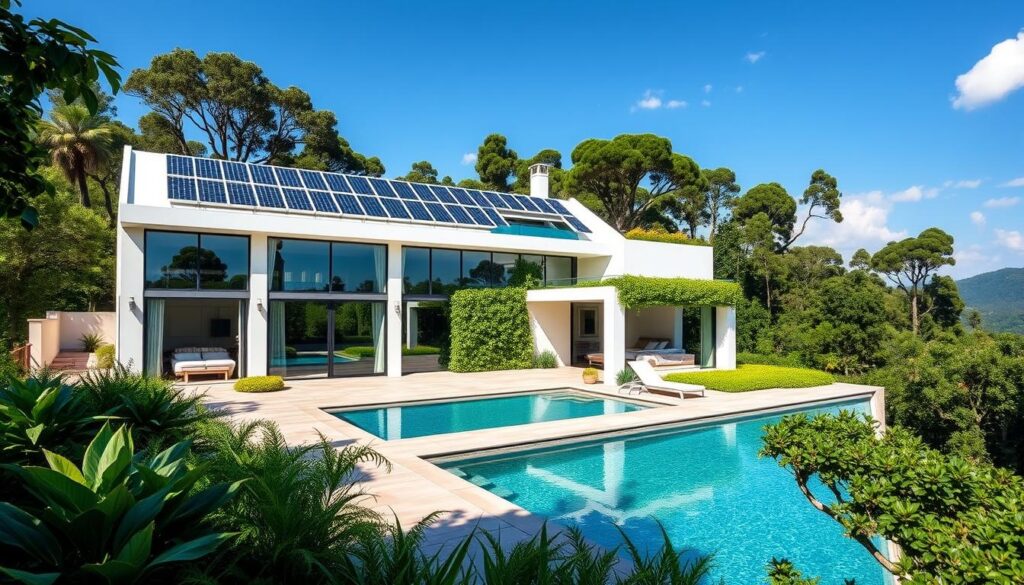
Getting certifications like LEED, BREEAM, and WELL shows a property cares about the planet. These homes can earn more and sell for more, making them great for investors. Using materials like CLT, recycled steel, and green concrete is also popular. It cuts down on carbon and saves energy. This makes luxury homes more appealing to those who want to live sustainably.
The Role of Global Events on Luxury Property Trends
Luxury properties are seen as a solid investment. But, global events can change their value. Economic downturns and political instability can hit the luxury real estate market hard. It’s key to have passive income strategies to lessen losses. Investors looking at long-term property investment should weigh the risks and rewards of luxury properties worldwide.
Global events, like policy changes or economic shifts, can sway luxury property demand. For example, more people want luxury second homes due to urbanization and remote work. Also, new luxury spots in unknown areas offer chances to buy before prices go up.
Investors can use passive income strategies, like renting out luxury homes. These can earn much more than regular rentals. To succeed in long-term property investment, keeping up with global events and market changes is vital.
Knowing how global events affect luxury property trends helps investors make smart choices. They can craft effective passive income strategies for their long-term property investment goals. As the luxury real estate market grows, staying current with trends and developments is key to success.
Investment Strategies for Luxury Real Estate
Luxury real estate investment needs a solid plan. This includes diversifying your portfolio and managing risks. The Coldwell Banker Global Luxury program says these are key. To succeed, you must have a strategy that includes a diverse portfolio and risk management.
High-end properties keep their value better than regular ones during tough times. They also have steady demand, which means more rental income. Over time, luxury properties tend to increase in value, thanks to their quality and rarity.
Strong markets for luxury real estate include New York, London, Hong Kong, and Dubai. These places are known for their economic stability, cultural importance, and good infrastructure.
To invest in luxury real estate successfully, you need clear goals and criteria. This includes what kind of property, where it is, and what amenities you want. It’s also important to know how much risk you can handle. Diversifying your portfolio helps stabilize returns and protect against market ups and downs.
By following these tips and diversifying your portfolio, you can make smart choices in luxury real estate. Keep an eye on the economy and watch supply and demand in the luxury housing market. Strategic tax planning can also boost your returns. With the right strategy, luxury real estate can be a profitable and stable investment.
Financing Options for Luxury Properties
Investing in luxury properties requires a solid plan. Real estate tips stress the need to know about financing. Jumbo mortgages are for high-value homes, needing strict credit and big down payments.
Portfolio loans and private bank financing offer more freedom but have higher rates. Bridge loans and interest-only mortgages help buyers secure homes fast or pay interest only for a time. Adjustable-rate mortgages start low but can change with the economy.
Foreign national loans and crowdfunding help international buyers and small investors. Real estate hedge funds and private equity need big money but can pay off big.

To succeed in luxury real estate, knowing your financing options is key. Mortgage rates and inflation affect luxury property financing. By adapting to market changes and exploring different financing, investors can reach their goals.
The Federal Reserve’s policies impact interest rates, so buyers must stay current. Whether it’s a jumbo loan or private equity, a good plan is essential. Following real estate tips and keeping up with trends helps investors succeed in luxury property financing.
The Impact of Luxury Rentals on the Market
The luxury real estate market is changing fast, moving towards more rentals. Sotheby’s International Realty found that over 70% of real estate pros see more demand for luxury homes. This is because high-end travelers want unique, personalized experiences, which 70% of luxury vacation rentals offer.
Experts say it’s smart to plan for the luxury rental market’s needs. This means investing in homes that appeal to these travelers. For example, in places like Telluride, Colorado, and Honolulu, Hawaii, prices start at $4 million and $2 million, respectively. Having a solid rental strategy is key to success.
The luxury rental market is set to grow at 5.3% each year until 2030. In 2021, the vacation rental market was worth USD 74.64 billion. Investors need to follow advice and have a good plan to stay competitive.
Knowing what the luxury rental market wants can help investors make smart choices. With the right advice and strategy, they can succeed in the luxury real estate world.
Regulatory Changes Affecting Luxury Real Estate
The luxury real estate market is greatly influenced by new rules and taxes. To grow wealth and earn passive income, people must adapt to these changes. For example, the Foreign Investment in Real Property Tax Act (FIRPTA) makes foreign sellers pay 15% of the sale price to the Treasury at closing.
Recent data shows a drop in foreign buyers in the U.S. real estate market. From April 2022 to March 2023, foreign buyers spent $53.3 billion, down 9.6% from before. This fall is due to stricter rules and taxes. At the same time, American buyers are more interested in buying abroad, with a 7% increase in interest.
The rules for real estate keep changing. Countries like India have laws like the Real Estate (Regulation and Development) Act (RERA) to make property deals clearer. The Goods and Services Tax (GST) also makes taxes simpler for developers. By keeping up with these changes, people can make smart choices in luxury real estate and find ways to build wealth and earn passive income.
Future Trends to Watch in Luxury Real Estate
The luxury real estate market is always changing. Investors and buyers need to keep up with new trends. These trends include new technologies and a focus on being green.
New tech like artificial intelligence and blockchain will change how we invest in real estate. They make things more efficient and help us make better choices. Also, people want homes that save energy and are good for the planet. This means homes will be built to be more eco-friendly.
Being green is becoming more important in luxury homes. Homes with eco-friendly features will be in high demand. There are also tax breaks and government programs to help build more green homes.
