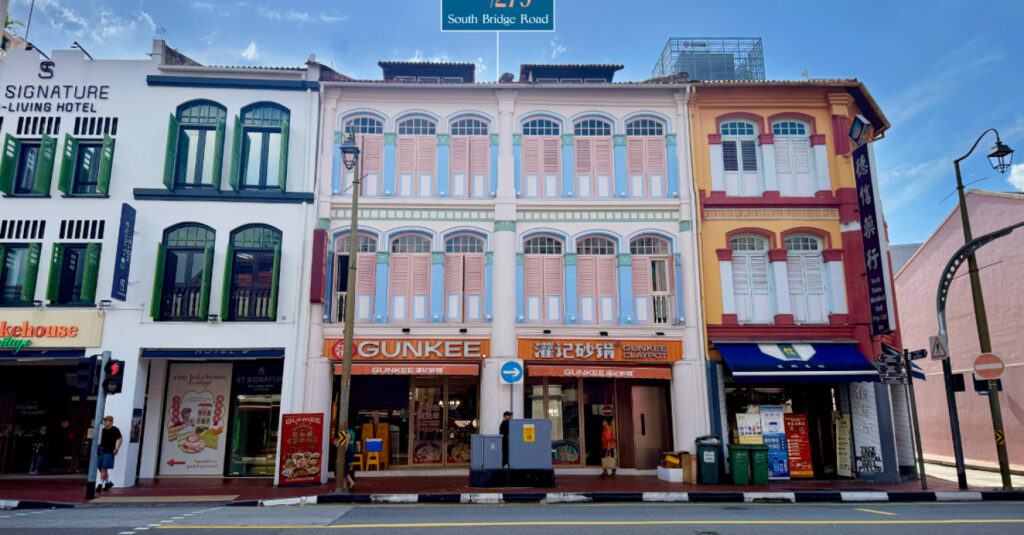
The conservation shophouse market in Singapore is bracing for a high-stakes litmus test as Clifton Partners officially places a pair of heritage assets on South Bridge Road up for sale. In a bold strategic move, the private equity real estate firm has opted to list the properties without a formal guide price, effectively inviting the market to dictate the current ceiling for premium conservation assets. This “price discovery” approach signals a high level of confidence in the enduring appetite for shophouses, which have transitioned from quirky historical relics to some of the most defensive and coveted institutional-grade investments in the city-state.
Located in the vibrant heart of the Chinatown-Telok Ayer conservation district, these shophouses represent the pinnacle of “adaptive reuse.” Clifton Partners is known for its meticulous approach to refurbishment, often stripping back decades of wear to reveal original timber beams and ornate masonry while injecting modern, high-spec interiors. By presenting these assets as “turnkey” solutions, they are targeting a specific breed of investor: family offices and high-net-worth individuals who crave the prestige of a heritage facade without the logistical headache of managing a complex restoration project.
The decision to omit a guide price is a tactical play that highlights the scarcity of the asset class. Unlike residential condos or industrial units, which can be benchmarked against thousands of similar transactions, every conservation shophouse is a “one-of-one” proposition. By opening an Expression of Interest (EOI) exercise without a price anchor, Clifton Partners is allowing competitive tension to drive the valuation. In a market where record-breaking transactions are becoming the norm, a fixed guide price can often act as an accidental ceiling, preventing the seller from capturing the full “scarcity premium” that a motivated buyer might be willing to pay.

From a logistical standpoint, the South Bridge Road location is peerless. Situated on the fringe of the Central Business District, these shophouses benefit from a dual-flow of traffic: high-powered corporate footfall during the day and a bustling lifestyle and dining crowd by night. This versatility makes the units highly attractive to a wide range of “sticky” tenants, from boutique law firms and creative agencies to Michelin-starred concepts. For an investor, this translates to lower vacancy risks and a diverse income stream that isn’t solely reliant on a single industry or economic sector.
The broader context of this sale is also a reflection of Singapore’s status as a global “safe haven.” While traditional commercial office towers face headwinds from hybrid work trends, shophouses offer a grounded, tangible sense of ownership that resonates with long-term wealth preservation strategies. These are not just buildings; they are cultural artifacts. As the supply of gazetted conservation shophouses remains strictly capped by the Urban Redevelopment Authority (URA), the simple math of supply and demand suggests that even without a guide price, the final closing figure will likely set a new benchmark for the district.
Ultimately, this move by Clifton Partners will be closely watched by analysts as a bellwether for the 2026 property market. If the bidding is aggressive, it will confirm that the “shophouse fever” of the early 2020s has matured into a stable, high-value asset class. For the potential buyer, the lack of a price tag is both a challenge and an opportunity—a chance to secure a legacy asset on one of Singapore’s most historic thoroughfares, provided they have the vision (and the capital) to match the seller’s high expectations.
